250+ Global Threat Experts

200k Hours of Pen Tests Delivered Annually

1M+ New Malicious URLs Detected Monthly

Billions of Threat Intelligence Records

Hundreds of Proprietary Use Cases Applied Across Clients Globally

30k Vulnerabilities Discovered Annually

Security Threat & Adversarial Research
Track threat groups and dissect the tactics, techniques, and procedures of real-world attacks. A source of vital threat intelligence for offerings.

Penetration & Vulnerability Testing
Elite team of skilled penetration testers dig deep into clients physical and IT infrastructure to weed out weaknesses before exploitation.

Digital Forensics & Incident Response
Respond immediately to an emergency breach. Identify the source, its impact, secure evidence, support litigation, and recover.

Human-Led Threat Hunting
MITRE aligned behavioral and hypothesis based threat hunters find security gaps and eliminate active and persistent threats that bypass security tools.


Detection in Depth

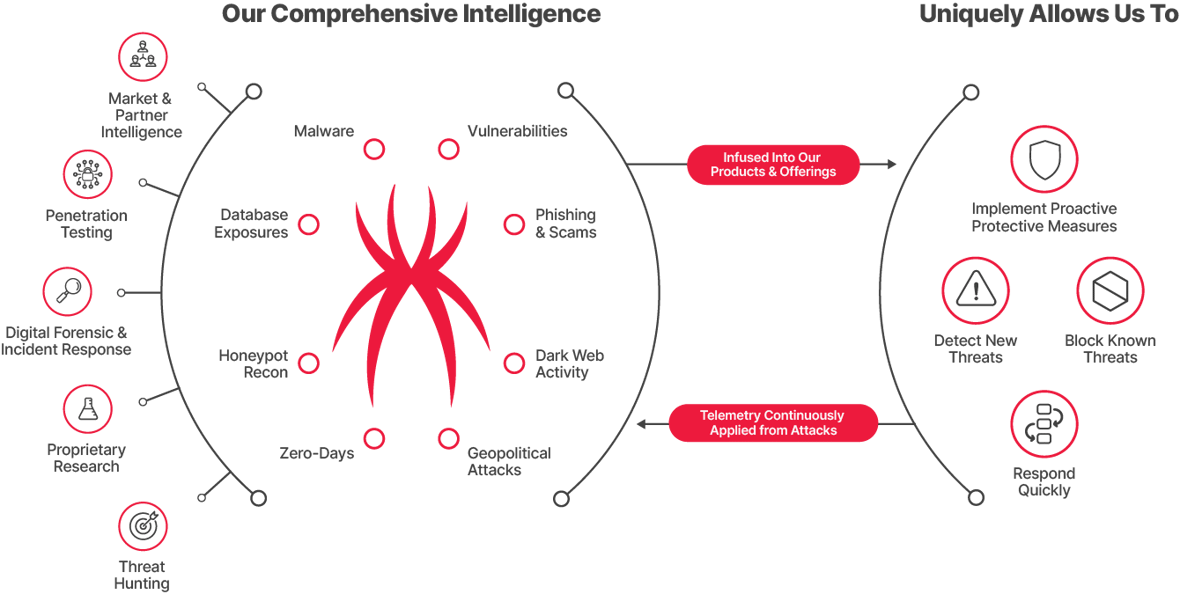
- Threat intelligence is the backbone of our detection capabilities.
- Trustwave SpiderLabs analyzes vast repositories of intelligence from in-house investigations, continuous threat hunts, intel from partners, and open-source threat feeds.
Unparalleled Access
- Our extensive threat intelligence can't be replicated by organizations on their own.
- Many organizations are turning to MDR providers for our broad threat intel and elite experts.
Constant Vigilance
- Our dedicated security analysts are always active.
- They comb through the latest threat intelligence from public and private data repositories, and telemetry from our broad client base, which is all incorporated back into our offerings.




Security Advisories
The latest vulnerabilities discovered by Trustwave SpiderLabs

SpiderLabs on X
The elite security team at @SpiderLabs
Trustwave SpiderLabs is proud to be a global CREST certified organization for both Penetration Testing and Simulated Target Attack & Response (STAR) Penetration Testing. Being a global organization with global reach we’re able to constantly give our global customers the very best service to ensure that their demands are met and that they are able to increase their cyber maturity through cutting edge Penetration Testing and modern attack based simulations.
Our global CREST membership proves to clients that we are invested in training and ensuring that our staff are keeping up-to-date with the very latest tools, tactics and procedures.